Wednesday, February 11, 2009

A Journey of Poems edited by Richard Niebling


A Journey of Poems: An Original Anthology of Verse edited by Richard Niebling was compiled in the 1960s as a student's introduction to both well- and lesser-known poems.

Two things are particularly noteworthy about this book. One is Niebling's choice of divisions. Many introductory literature texts are divided chronologically, which makes sense, but often leaves the uninitiated reader sick of literature before he manages to clear the Renaissance. Niebling's divisions are loosely based on tone and theme, and within each section, poems are carefully ordered so that one idea flows easily into the next. He also lets the poems "be"--not forcing interpretations on readers and keeping explanatory notes to a minimum.

The second noteworthy choice is Niebling's placement of lesser-known poems and poets ("Pitcher" by Robert Francis and "The Gull" by Michael Thwaites) next to ubiquitous classics (Yeats' "Second Coming," Shakespeare's "Shall I Compare Thee to a Summer's Day," Coleridge's "The Rime of the Ancient Mariner"). Even work by the expected poets is not necessarily expected. (How wonderful to find something by Frost in an introductory collection other than "The Road Not Taken.")

This is not my favorite anthology. I would have preferred more translations and the inclusion of, say, some e.e. cummings, Elizabeth Bishop, T.S. Eliot, etc. But how much can you fit in a poetry volume without making it look frighteningly huge? (A Journey of Poems is a slim 175 pages of poems.) A Journey of Poems also contains poets who interested me when I was younger, but whose over-familiarity has now bred... well, something more like boredom than contempt. Niebling's volume is, however, an enjoyable collection--for both the student and anyone interested in sampling various poetry flavors.

Tuesday, February 10, 2009

Gaelic Ghosts by Sorche Nic Leodhas

The ghosts in Gaelic Ghosts by Sorche Nic Leodhas (aka LeClaire Gowans Alger) are the least frightening, most good-natured haunts you'll meet in a long time. Half the fun of Nic Leodhas' stories resides in the telling. Nic Leodhas' writes the stories as they would be told by an expert Scottish storyteller. The written brogue is natural and wry, and not so thick that it's unbelievable (if you've ever read Caleb Balderstone's dialogue in The Bride of Lammermoor, you know what unreadable brogue looks like).

Gaelic Ghosts includes about 20 woodblock illustrations by Nonny Hogrogian, but book remains fairly text-heavy, although short (110 p.).

In this collection of ten non-terrors, the task of ghosts is not so much to frighten but to correct a wrong. In "Sandy MacNeil and His Dog," "The Grateful Old Cailleach," and "The Old Laird and His Dogs" the ghosts reward and protect those they "haunt." In "The Giant Bones," "The Gambling Ghosts," "The Walking Boundary Stones," "The Lady's Loaf-field," and "The Holy Relic of Bannockburn" hauntings serve to set people back on the straight and narrow. Most of all, however, the ghosts serve as reminders not to value the past too lightly.

Gaelic Ghosts ends on the farcical tale "The House that Lacked a Bogle." My memory is that this story (or a very similar version) appeared in a Halloween issue of the children's magazine Cricket, and several online sellers are marketing Gaelic Ghosts as a children's book. I hadn't considered the book a children's collection while I was reading it, but like the best folktales, the stories in Gaelic Ghosts should amuse readers across a wide span of ages.

Monday, February 9, 2009

Once Upon a Marigold by Jean Ferris


A fairytale about a young boy who runs away from home to live with a (very surprised) troll, a princess cursed with being able to read people's thoughts, several bouncy dogs, and an evil queen with a pet ferret. Jean Ferris' middle school novel Once Upon a Marigold: Part Comedy, Part Love Story, Part Everything-But-the-Kitchen-Sink really ought to be the sort of book I love. Unfortunately, somewhere between the concept and the writing, the author lost me.

I suppose I was expecting more from Once Upon a Marigold because I've read such great things about Ferris' Love Among the Walnuts, Or How I Saved My Family from Being Poisoned (recommended by ALA and nominated for a National Book Award).

But back to Once Upon a Marigold... Ferris is half poking fun at fairytales and half over-earnest. On the one hand, there are tongue-in-cheek subplots, such as Edric's attempt to crack the Tooth Fairy's monopoly of the tooth market. And Edric's mangled metaphors ("He'd buttered his bread, and now he had to lie in it") never fail to trigger smiles.

On the other hand, despite Ferris' obvious writing skills, her prose often needs tightening. There are too many scenes where characters tell and then retell each other information the reader already knows and too many characters' responses that are based on the needs of the plot rather than believable human reactions. I also wish more had been made of Marigold's curse--this interesting idea was merely incidental to the plot. The protagonists, Christian and Marigold, are highly likable, but sound so cheesy at times that I have to wince. I expect love and marriage to be somewhat simplified in books for middle-schoolers. But I know this can be presented better:

"If my Marigold vouches for you, that's good enough for me. But you'll have to stay here just a little longer."

"No, Papa," Marigold insisted, holding on to the bars of Christian's cell. "They have to get out now."

Christian reached through the bars to run his fingers along the smooth curve of her cheek. "It's all right. I'll be waiting for you. Don't forget me."

"Never," she said.

Oh my, thought Ed and Swithbert simultaneously.

Compare Ferris' passage above to another confession of love in another popular middle school fantasy, Ella Enchanted by Gail Carson Levine:

Dear Ella,

Impatience is not usually my weakness. But your letters torment me. They make me long to saddle my horse and ride to Frell, where I would make you explain yourself. They are playful, interesting, thoughtful, and (occasionally) serious. I'm overjoyed to recieve them, yet they bring misery[...].

You like me. You wouldn't waste time or paper on a being you didn't like. But I think I've loved you since we met at your mother's funeral. I want to be with you forever and beyond, but you write that you are too young to marry or too old to marry or too short or too hungry--until I crumple your letters up in despair, only to smooth them out again for a twelfth reading, hunting for hidden meanings.

Still a little silly, yes, but a more believable, love-induced silly.

Most of the reviews online were glowing, and most were by middle-schoolers, whose judgements of this book matter a great deal more than mine. While overwhelmingly positive, several reviews complained about Once Upon a Marigold's slapdash ending. Beyond the surprise of sudden conclusions to previously stretched-out senarios, what startled me was Ferris' cliffhanger ending. The unsatisfying last lines are obviously a lead-in to Ferris' sequel Twice Upon a Marigold, but while I still plan to look for Ferris' Love Among the Walnuts, I think I'll skip Once Upon a Marigold, Part Deux.

Note: Book cover image from Norwalk Middle School Library.

Friday, February 6, 2009

More Things in Heaven and Earth... Hamlet Text Adventure Game

Everyone is probably tired of my Hamlet obsession by now, but this is the best thing I've seen in ages. Yes, a Hamlet text-based adventure game. I never played many computer games growing up, so didn't take long for me to die--bisected by Othello's scimitar. Yes, bizarre, but let's be honest: Othello could totally take Hamlet. And there is something oddly sastisfying about typing ">kill claudius with flute, >kill claudius with nailscissors," even if it's all to no avail.

I'm addicted.

Thursday, February 5, 2009

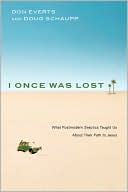
I Once was Lost: What Postmodern Skeptics Taught Us about Their Path to Jesus by Don Everts and Doug Schaupp


Don Everts and Doug Schaupp admit that they don't have a firm definition of postmodern (I don't know anyone who does), but they've noticed that people's views and their approaches to Christianity have shifted subtly during the past two decades. In I Once was Lost: What Postmodern Skeptics Taught Us about Their Path to Jesus, they discuss what they've learned about ministering to a postmodern culture.

This book interested me because I've sometimes wondered if I don't quite "get" evangelism. The image I was generally given of a good evangelist was either someone who worked the Romans Road into every conversation with non-Christian friends or somehow yanked these friends into church, where a fiery sermon and an altar call would do the trick. Well, most of my non-Christian friends are pretty darn smart, and there's no way I could ever "trick" any them into the faith. Any traditional evangelical efforts only result in rolled eyes and an affirmation of their beliefs about "crazy religious fundamentalists."

Some non-Christians are just waiting for an invitation to believe. But Everts and Schaupp believe that "the lost" are not simply a one-dimensional lump of humanity.

If our most sophisticated understanding of the path to faith says that our neighbor is either a Christian ("on") or not a Christian ("off"), then we tend to have just as unsophisticated a response to them. If they aren't a Christian, well, it's time to pull out evangelism shotgun to try to force the switch to the "on" position. That's what it means to "do evangelism," after all. (Which tends to explain why we so rarely engage in evangelism.)


I Once was Lost encourages Christians to match their evangelistic efforts to individuals rather than abstractions, and suggests viewing non-Christians as at different thresholds in their journey to Jesus.

The thresholds are
1) Trusting a Christian
2) Becoming Curious
3) Opening Up to Change
4) Seeking After God
5) Entering the Kingdom

I won't try to explain all the thresholds here (click the book title above if you're curious). These divisions are based on conversations the authors had with over 1,000 postmoderns about their conversion experiences. Although this is still a form of lumping people together, the categories didn't feel contrived to me. In fact, they set off little light bulbs in my head as I thought back to conversations with friends and realized, "Oh, that's where they were coming from!" (It also may explain some of my uncertainty about Mere Christianity; the book's geared toward those who are open to Christianity, but I've heard many people say that they hand it to dedicated atheists. I can't imagine this works well.)

Cons: I hit a passage that said: "If you ever feel stuck wondering what you could do to help a non-Christian friend grow, telling him or her your favorite stories about Jesus is almost always a great thing to do."

My immediate reaction was "Seriously?" That seems a little contrived to me. Most of my non-Christian friends have grown up around Christianity and they can smell "subtle" proselytizing from a mile away. Just beneath this passage, Everts and Schaupp reiterate the need "be sensitive to what level of interest [people] actually have," so my reaction may say more about my friends' levels of religion-based distrust than Everts' and Schaupp's methods. But I felt, at times, that they needed to remind readers to be natural with their Christianity--when talking about your faith, you are (hopefully) presenting the relationship and excitement about Jesus you actually have, not the relationship and excitement you think you ought to have.

All in all, however, I highly recommend I Once was Lost. Everts and Schaupp are frank about the absence of a magic, fail-proof way to convince people to believe and the fact that each non-believer is an individual, not simply another fish in the evangelism sea.

Note: Book cover image from Barnes and Noble.

Rest In Peace, John Updike

While I was out of contact with the world, John Updike died.

Wednesday, February 4, 2009

A Terrible Beauty: Winter Storm 2009, Western Kentucky

In case anyone was wondering, I haven't been asleep at my post. Western Kentucky was right in the middle of a catastrophic ice storm, and I've been without power for 8 days. (700,000 homes/sites lost power, and some may not have it for weeks yet.) The kinfolk and I are fine (Praise God!), but being in the center of federal disaster area does not lend itself to frequent blogging. Please keep the area in your prayers--especially people without any heat or water.


Like elaborate blown-glass... Aprox. one inch of ice, which the local media said made the trees weigh 30 times more.

Most of our trees couldn't hold that kind of burden.


The treeline around the house (or anywhere I've been, really) looks like a drunk barber came through with a giant pair of clippers. For at least 24 hours after the storm hit you could hear large branches cracking and falling at the rate of about three a minute. First, there would be a sudden popping noise, like gunfire in the distance; then a loud crack! as the branch broke completely free; and finally a tinkling sound, like glass wind-chimes, as everything fell.


After the ice melted, the top finally snapped off this juniper tree (greenish thing to the left). Stepping outside, the first thing that hit me was the "green" and slightly spicy smell of all the broken pine and oak trees.


Close-up of a hole through the roof of my parents' house. (Caitlin, if you're reading this, take a close look--it'll be gone before you get back. Terribly undramatic for a hole-through-the-roof, I thought. Not that I'm complaining.)


Dad taking care of some of the mess with his chainsaw. Still photos don't begin to capture the otherworldly nature of the aftermath. Sometimes life is more dramatic than literature.

(Note: Many of these photos were stolen from my parents. Thanks, Mom and Dad!)