Showing posts with label Christian nonfiction. Show all posts

Sunday, February 15, 2015

50 Books List for 2014

Every year I try to read at least fifty books. What gets included on this list is bit arbitraryfor example, short picture books don't count, short poetry volumes usually do; individual comic book issues don't count, but trade collections of multiple issues do. I missed posting my list for 2013, but here's the list for 2014.

Key:
Fiction
Poetry
Nonfiction
Memoir
Underline of any color= graphic novel/comic book  

  1. Robin: Year One—written by Chuck Dixon and Scott Beatty, illustrated by Javier Pulido and Robert Campanella
  2. Harry Potter and the Half-Blood Prince—J.K. Rowling
  3.  Portraits of a Marriage—Sándor Márai, trans. by George Szirtes
  4. Tell the Wolves I’m Home—Carol Rifka Brunt
  5. Gunnerkrigg Court, Vol. 1: Orientation—Thomas Siddell
  6. The Plain Janes—written by Cecil Castellucci, art by Jim Rugg
  7. Sweeney Astray—translated by Seamus Heaney
  8. Saints—Gene Luen Yang
  9. Gunnerkrigg Court, Vol. 2: Research—Thomas Siddell
  10. Batman & Robin, Vol. 1: Born to Kill—written by Peter J. Tomasi, illustrated by Patrick Gleason and Mick Gray
  11. Nightwing: Year One—written by Chuck Dixon, illustrated by Scott McDaniel and Andy Owens
  12. Teaching My Mother How to Give Birth—Warsan Shire
  13. A Town Like Alice—Nevil Shute
  14. In the Woods—Tana French
  15. Gunnerkrigg Court, Vol. 3: Reason—Thomas Siddell
  16. Harry Potter and the Deathly Hallows—J.K. Rowling
  17. Nightwing: The Lost Year—written by Marv Wolfman and Marc Andreyko; art by Joe Bennett, Jack Jadson, Jamal Igle, Jon Bosco, Keith Champagne, Alex Silva, etc.
  18. Zot! Book 1—Scott McCloud
  19. Surprised by the Voice of God—Jack Deere
  20. The Fire in All Things: Poems—Stephen Yenser
  21. The Book Thief—Markus Zusak
  22. Batman and Robin, Vol. 2: Pearl—written by Peter J. Tomasi; art by Patrick Gleason, Mick Gray, Tomas Giorello, etc.
  23. Batman and Psychology: A Dark and Stormy Knight—Travis Langley
  24. Catching Fire—Suzanne Collins
  25. Sex at Noon Taxes—Sally Van Doren
  26. Nightwing, Vol. 1: A Knight in Blüdhaven—written by Chuck Dixon; art by Scott McDaniel and Karl Story
  27. Batman: The Heart of Hush—written by Paul Dini, illustrated by Dustin Nguyen and Derek Fridolfs
  28. Mockingjay—Suzanne Collins
  29. Streets of Gotham, Vol. 1: Hush Money—written by Paul Dini, illustrated by Dustin Nguyen
  30. Streets of Gotham, Vol. 2: Leviathan—written by Paul Dini; Mike Benson; and Christopher Yost, art by Dustin Nguyen and Derek Fridolfs
  31. An Exact Replica of a Figment of My Imagination—Elizabeth McCracken
  32. Of Gravity and Angels—Jane Hirshfield
  33. Comfort Me with Apples—Ruth Reichl
  34. Batman: Streets of Gotham, Vol. 3: House of Hush—written by Paul Dini, illustrated by Dustin Nguyen and Derek Fridolfs
  35. Nightwing, Vol. 1: Traps and Trapezes—written by Kyle Higgins; illustrated by Eddie Barrows, Eduardo Pansica, Geraldo Borges, JP Mayer, Paulo Siqueira, Eber Ferreira, Ruy José, etc.
  36. A Tale for the Time Being—Ruth Ozeki
  37.  Everything is Illuminated—Jonathan Safran Foer
  38. Batman Incorporated, Vol. 1: Demon Star—written by Grant Morrison; art by Chris Burnham (p), Frazer Irving (p), Bit artists (p), Nathan Fairbairn (c), Frazar Irving (c), etc.
  39. JLA/W.I.L.D.Cats—written by Grant Morrison, (art by ?)
  40. Batman Incorporated—written by Grant Morrison, art by Yanick Paquette and Chris Burnham
  41. Doc—Mary Doria Russell
  42. Shackleton: Antarctic Odyssey—Nick Bertozzi
  43. Best Shot in the West: The Adventures of Nat Love—written by Patricia C. McKissack and Fredrick L. McKissack Jr., art by Randy Duburke
  44. The Search—written by Eric Heuvel with Ruud van der Rol and Lies Schippers, art by Eric Heuvel, trans. by Lorraine T. Miller
  45. Brown Girl Dreaming—Jacqueline Woodson
  46. The Light Between Oceans—M.L. Stedman
  47. Bone: Out from Boneville—Jeff Smith
  48. The Search for Delicious—Natalie Babbit
  49. Dogs of War—written by Sheila Keenan, art by Nathan Fox
  50. March: Book One—story by John Robert Lewis and Andrew Aydin, art by Nate Powell
  51. Lewis & Clark—Nick Bertozzi 
Last year I read thirty-six works of fiction, six volumes of poetry, five works of nonfiction, and three memoirs. Of those, twenty-three of the fictional works were graphic novels or comic book collections, as were three of the nonfiction texts and one of the memoirs. This means that over half (twenty-seven books) of my fifty books were comic books.

I shouldn't be surprised, especially given my recent project

I could tell I wasn't reading many (text-based) novels (something I'd like change this year), but I was bewildered to see so few nonfiction books on the list. I'd felt like I'd read more nonfiction last year. Then I realized. . .I read a lot of nonfiction last year, but mainly things that I can't count on this list: articles and blog posts, books I haven't finished yet, books I read huge sections of (for research), but not in their entirety (or in order). For example, Shelley Taylor's The Tending Instinct was one of the most interesting books I read last year, but I only completed about 80% of it.

Favorites:

My favorite novel of 2014 was, no contest, Mary Doria Russell's Docsharp and tender, full of pithy descriptions and heartbreaking characters.


My favorite nonfiction book was Surprised by the Voice of God by Jack Deere, in part because it was exactly the book I needed to read at the time. I had read parts (if not all) of it before, but what struck me this time through was the graceful humility with which it was written.

My favorite poetry read was a tie between Of Gravity and Angels (I always end up loving Jane Hirshfield's work) and The Fire in All Things, which made me promise myself I'd read it again in a few years and see if I understood different elements.

My favorite memoir was March: Book One, which surprised me because I hadn't expected so much artistry from a book so closely connected to a politician. But the story is well-told and captures John Lewis' personal journey and hallmarks of the Civil Rights movement in a way feels simultaneously broad and intimate. It left me eager for the next installment.

My favorite "capes" comic collection was Batman & Robin, Vol. 1: Born to Kill. This was the first Batman and Robin of the New52 reboot; a change I wasn't looking forward to. (I had been upset when the New52 broke up the duo of Dick Grayson's Batman and Damian Wayne's Robin for the "return" of Bruce Wayne.) But now I want all my superhero comics to be as thoughtful as this volume. The tension between father and son is so believable that it keeps the story grounded in psychological realism, even as the crime-fighting enters the typically bizarre world of Batman villains. Tomasi was wise enough to focus on the characters first and the heroics second. And Gleason's artwork is full of atmospheric shadows and heart-rending visual parallels.

My favorite non-capes comic collection was Gunnerkrigg Court, Vol. 2: Research because that was the volume where I realized I was absolutely addicted to the strange scientifically-magical/magically-robotic boarding school Thomas Siddell had created. Siddell had also grown into his art style by this volume. I have not caught up to the online comic yet, so I can't recommend it in its entirety (and if the inclusion of same-sex relationships ruins stories for you, this will not be your favorite read). I think of Gunnerkrigg Court as "Harry Potter with female protagonists and adorable robots." If that sounds awesome to you, check it out.

In an upcoming post, I'll write a bit about my reading goals for this year. But I want to know: What were your favorite books for 2014? And do you have any reading goals for 2015? 

Thursday, March 12, 2009

Girl Meets God: A Memoir by Lauren F. Winner


I don't read many memoirs, but when I do, I am always struck by how difficult it must to be to take your own life and pin it down in a story someone else will find worthwhile. I admit to feeling a certain level of trepidation over whether or not I should judge someone else's life on its artistic merit. Fortunately, I enjoyed Lauren Winner's Girl Meets God enough that I don't have to feel overly guilty.

Winner writes like a cross between an English and a history major--her writing style and approach to faith strongly attest her love of stories and tradition. Her style is not necessarily what I would term "literary" (in comparision to, say, Joan Didion's The Year of Magical Thinking), but it is always bookish. I particularly appreciated Winner's attempt to structure her memoir around the intermingling (Orthodox)Jewish/(Episcopalian)Christian calendar. Within these sections, however, the story often felt fragmented, and I wasn't sure why certain scenes were placed together.

The intended audience for Girl Meets God is probably the broadly-defined spiritual reader. But reading reviews on Amazon, I quickly came to the conclusion that different readers pick this book up for very different reasons. Christians readers want to know how Winner came to Christianity. Jewish readers want to know how Winner left Judaism.

I don't share all of Winner's theological conclusions, but she expresses her relationship with her new faith in some beautifully honest passages. Several readers complain about not having a clear grasp of what drew her to Christianity, but I appreciated the fact that she can't, for all her obviously academic and linear leanings, wrap her personal journey into neat theological points.


The Incarnation appealed to the literature buff in me. Embodiment was the novelistic culmination of anthropomorphism, of assigning God human characteristics. All through the Torah, God is pictured as having hands, a face. The rabbis say, Of course God doesn't really have hands, but the Torah uses the language of hands and faces and eyes so that we will have an easier time wrapping ours minds around this infinite, handless God. That is what you say if you are a rabbi. But if you are a good novelist, you actually give him Him hands and eyes by the end of the book, and that is what the Bible does. It says, in Deuteronomy, that God brought us out of Egypt with a mighty hand and an outstretched arm; and then it gives Him an arm in the Gospel of Matthew (51-2).

Unfortunately, the language of a faith which is new to her was sometimes a little stale for me. I was often more interested in her passages about Judaism (which is less familiar to me). Some of the most beautiful of scenes in the book recount, layer after layer, what Winner lost when she left Judaism, and her yearning to create connections between the two religious halves of her life. I was particularly moved by her description of buying a Jewish papercut of Ruth 1:21 (Naomi's lament: "I went away full, but the Lord brought me back empty"):


I track down the artist. Her name is Diane and she lives in New Mexico. I email her and ask if the papercut of Ruth 1:21 is available for sale. She writes back: She will sell me the picture for $900. It is Friday afternoon that we exchange these emails, and she wishes me a Shabbot shalom, and I think, Of course, she thinks I'm Jewish. I half-feel I am deceiving her by not spilling my entire religious autobiography to her over email. (Are you sure you want to sell your art to a traitor?)

When the papercut comes in the mail, I unwrap it with some ceremony, and hold it in my hands for a long time and then I hang the papercut on a wall with crosses--a sturdy, orange clay cross that I bought at that Episcopal church in Oxford, Mississippi, and a trio of iron crosses, Jesus' and the two thieves', that I found at a small craft shop in North Carolina. It hangs underneath those, and it looks delicate and just slightly out of place, like a bit of lace peeking out of a heavy woolen winter coat.

"It is a difficult verse," Diane writes to me in her email. "The challenge for me was to capture the loneliness of the verse, and still imbue it with a sense of beauty. I suspect it reflects difficult losses for you" (249-50).

All in all, Girl Meets God is a unique and honest addition to my small collection of memoirs.

(Image from Random House.)

Thursday, February 5, 2009

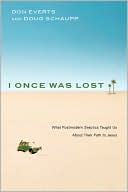
I Once was Lost: What Postmodern Skeptics Taught Us about Their Path to Jesus by Don Everts and Doug Schaupp


Don Everts and Doug Schaupp admit that they don't have a firm definition of postmodern (I don't know anyone who does), but they've noticed that people's views and their approaches to Christianity have shifted subtly during the past two decades. In I Once was Lost: What Postmodern Skeptics Taught Us about Their Path to Jesus, they discuss what they've learned about ministering to a postmodern culture.

This book interested me because I've sometimes wondered if I don't quite "get" evangelism. The image I was generally given of a good evangelist was either someone who worked the Romans Road into every conversation with non-Christian friends or somehow yanked these friends into church, where a fiery sermon and an altar call would do the trick. Well, most of my non-Christian friends are pretty darn smart, and there's no way I could ever "trick" any them into the faith. Any traditional evangelical efforts only result in rolled eyes and an affirmation of their beliefs about "crazy religious fundamentalists."

Some non-Christians are just waiting for an invitation to believe. But Everts and Schaupp believe that "the lost" are not simply a one-dimensional lump of humanity.

If our most sophisticated understanding of the path to faith says that our neighbor is either a Christian ("on") or not a Christian ("off"), then we tend to have just as unsophisticated a response to them. If they aren't a Christian, well, it's time to pull out evangelism shotgun to try to force the switch to the "on" position. That's what it means to "do evangelism," after all. (Which tends to explain why we so rarely engage in evangelism.)


I Once was Lost encourages Christians to match their evangelistic efforts to individuals rather than abstractions, and suggests viewing non-Christians as at different thresholds in their journey to Jesus.

The thresholds are
1) Trusting a Christian
2) Becoming Curious
3) Opening Up to Change
4) Seeking After God
5) Entering the Kingdom

I won't try to explain all the thresholds here (click the book title above if you're curious). These divisions are based on conversations the authors had with over 1,000 postmoderns about their conversion experiences. Although this is still a form of lumping people together, the categories didn't feel contrived to me. In fact, they set off little light bulbs in my head as I thought back to conversations with friends and realized, "Oh, that's where they were coming from!" (It also may explain some of my uncertainty about Mere Christianity; the book's geared toward those who are open to Christianity, but I've heard many people say that they hand it to dedicated atheists. I can't imagine this works well.)

Cons: I hit a passage that said: "If you ever feel stuck wondering what you could do to help a non-Christian friend grow, telling him or her your favorite stories about Jesus is almost always a great thing to do."

My immediate reaction was "Seriously?" That seems a little contrived to me. Most of my non-Christian friends have grown up around Christianity and they can smell "subtle" proselytizing from a mile away. Just beneath this passage, Everts and Schaupp reiterate the need "be sensitive to what level of interest [people] actually have," so my reaction may say more about my friends' levels of religion-based distrust than Everts' and Schaupp's methods. But I felt, at times, that they needed to remind readers to be natural with their Christianity--when talking about your faith, you are (hopefully) presenting the relationship and excitement about Jesus you actually have, not the relationship and excitement you think you ought to have.

All in all, however, I highly recommend I Once was Lost. Everts and Schaupp are frank about the absence of a magic, fail-proof way to convince people to believe and the fact that each non-believer is an individual, not simply another fish in the evangelism sea.

Note: Book cover image from Barnes and Noble.

Friday, January 16, 2009

Mere Christianity by C.S. Lewis


It's sad that I have been a reader and a Christian for this long and this is my first attempt at reading one of C.S. Lewis' nonfiction works (I've read The Chronicles of Narnia, Till We Have Faces, part of The Space Trilogy, and a short story or two). I doubt I have much to say about Mere Christianity that hasn't already been said, so I'll be brief.

Mere Christianity was not quite what I was expecting. I found myself arguing with Lewis all the way through the book, but when I got to the end I had to admit that I agreed with his basic statements. I suppose what made me argumentative was the knowledge that if I didn't already believe what he was writing about, I seriously doubt I would have been convinced by his arguments. Particularly since a large portion of his arguments consist of "What if the world was really more like [insert analogy] instead?" which is interesting, but not exactly irrefutable logic and made me want to ask, "Or what if it's really more like a kumquat?"

I can't, however, think of many other books that give such a concise and quotable summary of basic Christian beliefs. Below are a couple favorites:


I feel a strong desire to tell you--and I expect you feel a strong desire to tell me--which of these two errors is the worse. That is the devil getting at us. He always sends errors into the world in pairs of opposites. And he always encourages us to spend a lot of time thinking which is the worse (160).


Do not imagine that if you meet a really humble man he will be what most people call "humble" nowadays: he will not be a sort of greasy, smarmy person, who is always telling you that, of course, he is nobody. Probably all you will think about him is that he seemed a cheerful, intelligent chap who took a real interest in what you said to him. If you do dislike him it will be because you feel a little envious of anyone who seems to enjoy life so easily. He will not be thinking about humility: he will not be thinking about himself at all (114).

Sunday, January 11, 2009

Praying in Color: Drawing a New Path to God by Sybil MacBeth


She had me at Chapter -5.

The (short) introductory chapters on prayer in Praying in Color count backward down to Chapter 1, where Sybil MacBeth begins to explain her own method. And at that bizarre little numbering system, I knew I was going to like this book.

Let me add here that this is a book for people who pray like I pray... distractedly. This is a book for fidgetters. The idea behind it is not so much to still the body and the mind for prayer, but to focus the mind through involving the body in prayer and to use visuals as a prayer aid (both for prayer itself and for prayer reminders).

The Praying in Color theory is extremely simple (and the book, at just over 100 p., is extremely short): "When I draw as a way to enter prayer, I get to delight in my prayer and to feel God's delight that I am making an effort to pray." As someone who is always trying to connect the Arts and Christianity, I appreciated MacBeth's belief that prayer could be creative.

The cherry on the cake would be that this is a very well written little book. Authors of how-to books are not usually this enjoyable and honest:

"I feel quite free to make a mess of my personal prayer life; but when someone says, 'Please pray for me," they are not just saying, 'Let's have lunch sometime.' They are issuing an invitation into the depths of their lives and into their humanity--and often with some urgency. They are publicly exposing their vulnerability, sorrow, and fear. Something about their life is so out-of-control that they call upon the likes of me for help. I warn them: sometimes the people I've prayed for have died. It's a risk."


Finally, the proof is in the practice. I find I enjoy longer times of prayer when I include colored pencils and paper, and drawing helps me focus on what I'm praying for and who I'm praying to. I'm not, unfortunately, having an easier time remembering the person I'm praying for during the rest of the day. This may, however, say more about my memory than it says about Praying in Color. But using MacBeth's ideas with passages of Scripture does help me remember what I've been reading beyond the moment I close my Bible.

I'll definitely be adding Praying in Color to my devotional repertoire.